🎭 How to Choose the Best Seats

Opera is a feast for the senses β€” music, storytelling, visual art, and architecture β€” and where you sit directly affects how you experience all of it.

πŸ’‘ In this guide, we’ll break down how to choose the best seats at the opera house, depending on your preferences, priorities, and budget.

πŸ€” Understand the Italian Layout

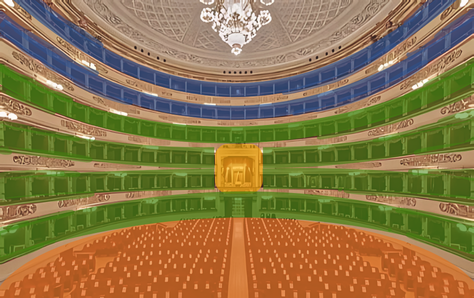
🟧 Platea (The Stalls)

On the ground level, you’ll find the stalls, or platea. This is the seating area closest to the stage. Originally intended for the not-so-wealthy public, it has evolved into one of the most sought-after sections due to its excellent visibility and sound quality. While rehearsing the operas, the stage director always looks at the scene from the center of the platea.

🟩 Palchi (The Boxes)

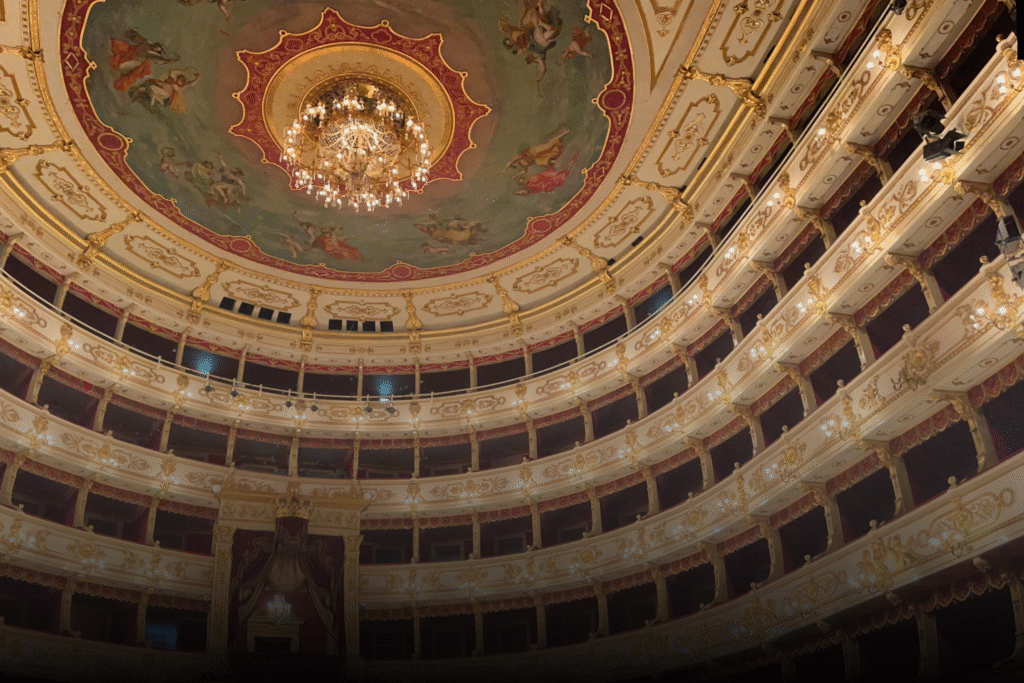
Rising above the stalls are theΒ boxes, or palchi (also collectively known as balconata). These are perhaps the most iconic feature of the Italian theatre. Each box is a small, separate room, with usually two seats in the front and two in the back. The most lateral boxes have a partial view of the stage, while from the highest ones everything appears flattened.

🟦 Galleria (Gallery) or Loggione (The Gods)

The uppermost section of the theatre can assume different layouts: if the seats are disposed in several rows with a steep incline, it is usually called Galleria, while if there is only a limited space for standing viewers, it is usually called Loggione (or Piccionaia).Β 

Cheaper because of the limited view, this is traditionally where the most passionate (and occasionally noisy) opera fans sit. These tickets are often sold at the last moment.

πŸ‘‘ Palco Reale

Placed in the middle tier – and often luxuriously decorated β€” is the Royal Box (Palco Reale). Reserved for special guests and authorities, it’s the focal point of social prestige in the theatre. It offers the best view of the stage.

πŸ™‹ Know what matters to you

Before explaining what are the legitimately best seats overall, I want to share with you some insights that can help you choose the best seat for your own specific situation (and give you some tools to distinguish between different theatres).

1. Best View

The view of the stage differs greatly from one seat to another. The first place to consider is obviously the center of the platea, because β€” as we said earlier β€” here is where the stage director seats during the final rehearsals. The first row after the aisle which usually divides the platea in two sections, is probably the most convenient, because there are no heads directly in front of you.

This is indeed a great pro of the the front row of the boxes, which, especially in the center of the first and second tier, offer a great view of the stage.

Extra Tip. From the boxes and from the loggione it is also possible to see the orchestra (which can be considered an added value).

2. Comfort

The comfort of the seats is largely dependent on the sizeΒ and on the age of the theatre.

Most seats are quite tight.

The boxes can be the most and least comfortable (I recommend you to check a photo of the theatre).

However,Β 

πŸ”’ Restricted section

3. Best Acoustics

4. On Budget

Overall Best Seats